George in the Gaol

Painting of a Stagecoach Outside 'The George in the Tree'
Stagecoach Outside ‘The George in the Tree’ by Edward Benjamin Herberte

My convict ancestors have been mentioned on this blog a few times, but unfortunately I haven’t really been able to find out much about their lives before they were transported to Australia. Since George WHITE is a fairly common name, the possible matches I find are hard to verify as being ‘my guy’, but I still like to cast my net out every now and then and see if I catch anything new.

It was while doing this that I came across another George WHITE of similar age in the Warwickshire criminal records.  He is not related to me since the record is dated 1837 whereas my George WHITE was transported in 1834, but I was curious to know more.

differentgeorgewhiteNOTrelated
Warwickshire Assizes entry for a George WHITE, 1837

21 year old, George WHITE was trialled for larceny at the Warwickshire ‘County Adjourned Session’ on the 14th March, 1837.  His ‘degree of instruction’ was recorded as N, which he meant he could neither read nor write [more info].  He was found guilty for this ‘mystery theft’ and imprisoned for 6 months.

I consulted the British Newspaper Archives and found a mention in the Leamington Spa Courier, printed 4 days after his conviction:

differentgeorgewhiteNOTrelated2
Leamington Spa Courier, 18 March 1837, p3 – NISI PRIUS COURT

George White, for stealing one leg and one shoulder of mutton, at the George in the Tree, in the parish of Balsall, the property of John Hemmings.  The prisoner had stolen the property out of the prosecutor’s shop, late one night, and when he was pursued he threw it away and escaped. – Six calendar months, house of correction, hard labour.

Leamington Spa Courier, 18 March 1837, p3

georgeinthetreemap
The George-in-the-tree public house marked on map c1890

I managed to find an interesting mention of the George-in-the-Tree pub in the Dictionary of Pub Names:

The pub was once the Royal Oak, with a signboard showing Charles II hiding in the tree. A licensee with little feeling for history is said to have had the head of Charles replaced by that of George III (then the reigning monarch) when the signboard needed repainting.  A different local story is that the pub (and sign) had become the George, but after a gale one night the signboard was found to have disappeared.  Only when a large elm tree across the road shed its leaves later in the year was the board discovered in its branches…

Hopefully this other George White eventually managed to find a better life for himself too.

beefeater-grill-george-in-the-tree-coventry-warwickshire-1
The George in the Tree pub in more recent times

Wreford Versus…

Looks like George may have been trying to raise some money for his emigration to New Zealand:

WrefordvManning

Wreford v. Manning.-The plaintiff, George Wreford, now of Tiverton, sued Mr. John Manning, high bailiff of this Court, for the recovery of £2 odd, which he alleged to be due for the keep of a horse, &c. – Mr. Shapland for plaintiff. – Mr. Manning said the claim was four years old; it dated Feb., 1861, and plaintiff passed the Insolvent Debtors’ Court on the 23rd April in that year, so that whatever was due to the estate belonged to his creditors. – After repeated and ineffectual attempts to elicit from the plaintiff the dates when Mr. Manning put his horses to pasturage and when they were withdrawn, &c., his Honour determined to adjourn the case, that a bill of particulars might be furnished.  If he had to make out the account it might take him a week. -Mr. Shapland: – Not quite so long as that. -His Honour: I will not make out the account for him; the rule requires that he shall furnish a bill of particulars with dates, &c., and not merely: To keep of horse, £2. -Case adjourned.

And a couple columns over…

WrefordvCummings

Wreford v Cummings. – An action for the recovery of £2 8s., alleged to be due from Mrs.Cummings, of Witheridge, for two months keep of a cow and 10s. on some other account. – The latter claim was disallowed, as plaintiff was a bankrupt at the time the debt was said to have been contracted, and the money (if due at all) belonged to his creditors.-Mr. Manning (the high bailiff) said he had put in two executions in virtue of which Wreford had been sold up. He (Mr.M.) took the fields in question of him, and allowed him for the rent in the settlement.-Plaintiff said he never made a bargain with any body.-His Honour:-Then you are not in a position to sue any body. Judgment for the defendant.

North Devon Journal – 17 Nov 1864, p6 [South Molton County Courts]

Buried Alive

hollybankcolliery
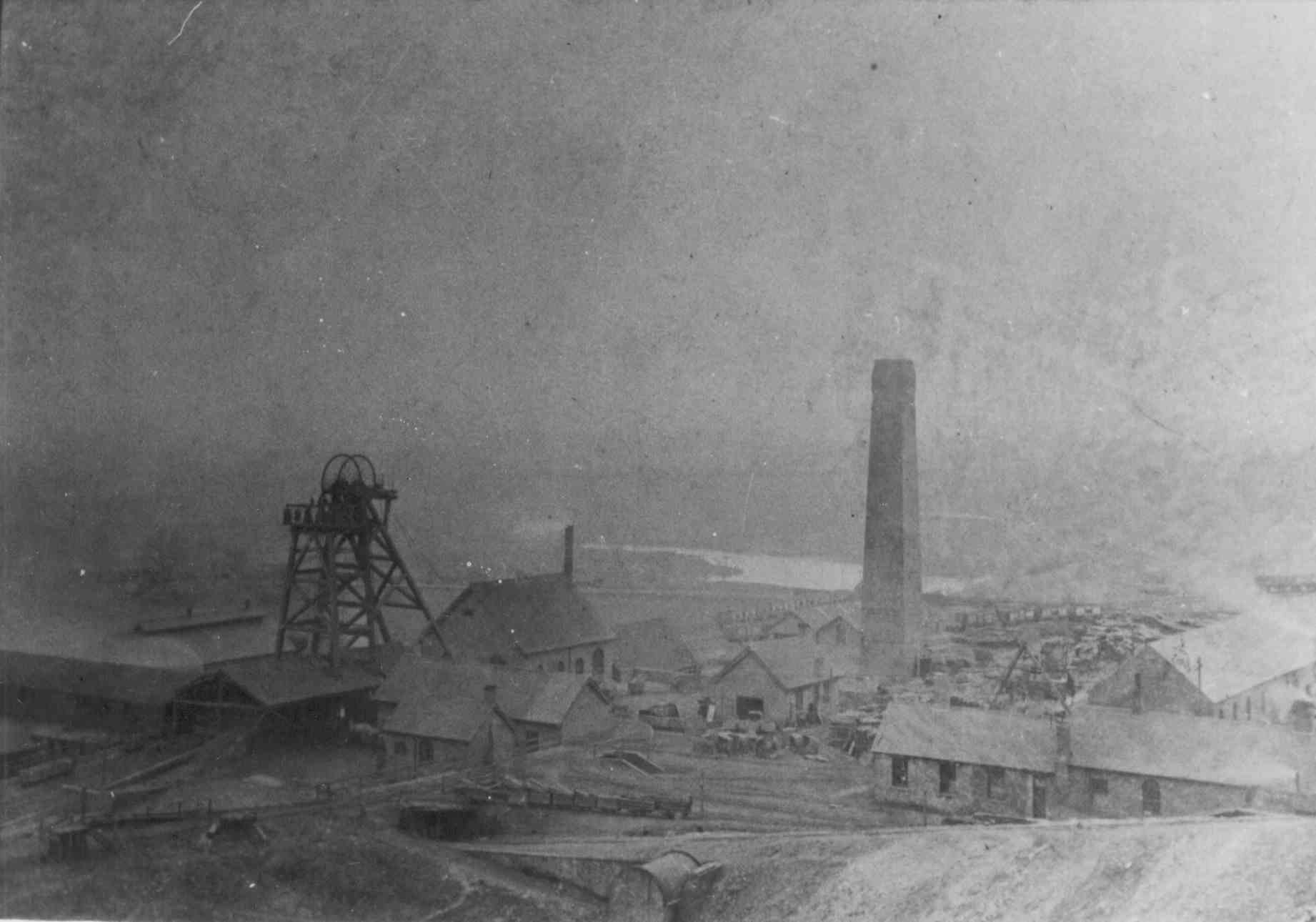
Holly Bank Colliery, Essington

One good thing about researching family with an uncommon name is that it can make trawling through newspapers a bit easier.  Such was the case, when I did a blanket search for EBBANS in the British Newspaper Archive.  Among the genealogical gems found (more on those in later posts), was a coal mining accident that killed a relative in 1909.

coalminingaccidentThomasEBBANScoalminingaccidentThomasEBBANS2

ESSINGTON MINER BURIED ALIVE.-An inquiry was held by Mr. T. A. Stokes (County Coroner) at Newtown, on Wednesday afternoon, concerning the death of Thomas Ebbans (31), lately residing at Walsall Road, Newtown, Essington, who was accidentally killed at Holly Bank Colliery on Monday, owing to a sudden fall of coal. – Mr. Felton, Deputy-Inspector of Mines, was present; and Mr. H. H. Jackson (Messrs. Stanley and Jackson) represented the widow. Mr. J. C. Forrest, manager of the colliery company was also present. – William Mitton, a miner, engaged at the colliery, said he was working with the deceased man when the accident occurred. He was loading, and deceased was working on the face of the coal. Deceased put a hole in the face in proparation [sic] for a shot to be fired, and then asked for a “sprag” to put into the coal. Before witness could hand over the “sprag” some tons of coal fell, and the man was buried. Witness had to jump away to save his life. An alarm was raised, and Ebbans was got out. Replying to the Coroner, witness said it was customary to undermine the coal in the way described. Everything was done in the usual way. – Questioned by the Deputy-Inspector of Mines, witness said he could not account for a pick which was found on the ground immediately after the accident. He did not see the deceased using a pick. -Edwin Thomas, night fireman, said he examined the district between five and six o’clock on Monday morning, and found everything in order. So far as his observations went the coal was then safe. -Police-constable Albert Buckham, stationed at Essington, said he examined the body after the accident, and found that the man’s right thigh and ribs were fractured, and the neck apparently dislocated. -The Coroner remarked that the deceased appeared to have taken every precaution. – “Accidental death” was the verdict returned.

Walsall AdvertiserSaturday 29 May 1909, p11

sprag
A sprag – a prop to support a mine roof.

As if the event wasn’t tragic enough, a little bit of research showed that his wife was left with at least one young child, possibly two, under 4 years of age. They had only been married 5 years.
The 1911 census had her and her young child staying with her parents.  Interesting to note that it says she had 3 children born alive – 2 still living. Had she been pregnant at the time of the accident?

Sarah EBBANS Dutton
1911 Census – Sarah EBBANS (widow of Thomas EBBANS)

I’m interested in what happened to Sarah Jane (nee DUTTON) and other wives who found themselves in similar tragic situations.  Did the coal companies look after them in any way?  Was the fact that Thomas’ widow had a solicitor usual in these cases?  Unfortunately, the fantastic ‘Coalmining History Resource Centre‘ didn’t seem to list this particular accident – although I may have searched it ‘incorrectly’ as the search function seemed a bit limited.  If you have coalmining ancestors, I recommend you give the site a look.  And if you know of any resources that might help me, please let me know.

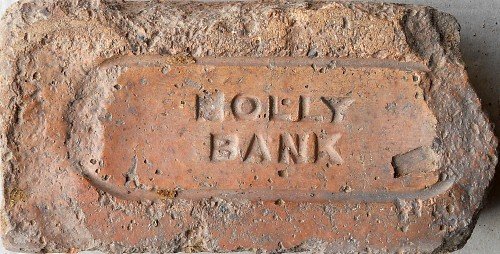
Holly Bank brick
Holly Bank Colliery brick
sswl_map4
West Midlands Division Map 119 A & B

Wrestling with Death (places)

William WREFORD was my famous (in those times) wrestling ancestor hailing from Devon (previously mentioned here and here).  So, the fact that the only likely death entry for him was registered in London was a bit worrying for me.  Could I be confident this was really him?
Luckily, I had found a newspaper article mentioning he had died ‘in the metropolis’ to help put my mind at ease:

DEATH OF A RENOWNED DEVONSHIRE WRESTLER. – On Sunday last the veteran William Wreford died after a very short illness at the house of one of his children, in the metropolis. (Exeter and Plymouth Gazette (Friday, 07 December, 1866)

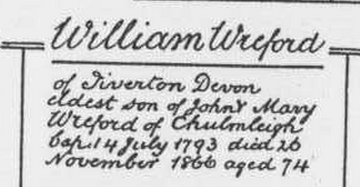
The Wreford Pedigree also notes that he died 26 November 1866 aged 74 which matches the death record, so I’m confident this is my William WREFORD.

776ec-will

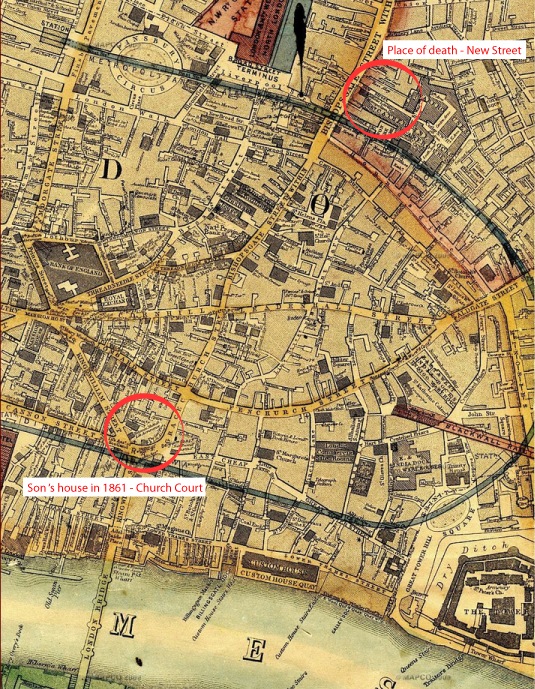
The death record states William, a yeoman, died of ‘Natural decay’ on 26 November 1866 at 5 New Street, Bishopsgate [London].  However, the informant is listed as Thomas Cusiok/Cuscok (also living at 5 New Street), NOT one of his children.

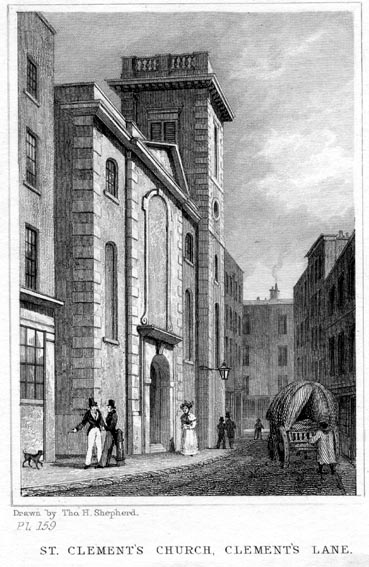
Two of his children were living in London around this time.  William’s son, also named William, had been living in London from at least 1840 – he had married at St Dunstan in the East, and was in the censuses until 1861 as living in the court behind St Clement’s church, Eastcheap. (He was in the police force but by 1871, he was a ‘coffee house keeper’ a little further north in Paul Street.)

1a5a5-williamwreforddeathmap

Also, his daughter, Elizabeth had married a mariner (Alexander SMALL) in London, 1853 and was a widowed lodging house keeper by the 1871 census (where she lived further north in Tower Hamlets – I’m yet to find her on the 1861 census).  Could Thomas Cusiok have been one of her lodgers?

Next steps:
  • Who is Thomas Cusiok/Cuscok?
  • Find Elizabeth SMALL (nee WREFORD) in 1861 census

Oh, Chrysler!

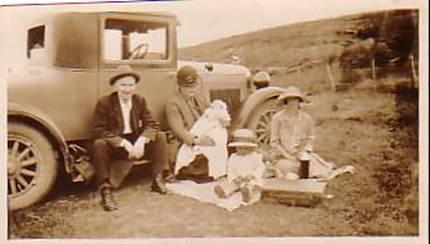
Family picnic beside an automobile c1920s

A couple of years ago, I posted the above picture of my grandmother’s family enjoying a roadside picnic in front of a ‘mystery mobile’. (The original post can be seen here).

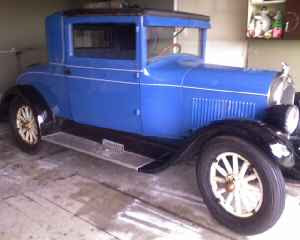
When my ‘car-brained’ brother came to visit a little while ago, I recruited him to help me find out more about the car in the picture.  After much google searching, we believe the car to be a 1927/28 Chrysler Imperial 52 coupe.  For comparison, here are some other pics of this model:

source: ‘Antique Automobile Club of America’ forums (2013)
source: Hemmings Motor News (Reader’s Rides) (2013)

I also found this vintage (American) advertisement from 1927 on the ‘Imperial Club‘ website:

via ImperialClub


(zoom of the ’52’):

New Chrysler “52”
I’m pretty sure this is the right one but I welcome any corrections or other information.