Wrestling with Death (places)

William WREFORD was my famous (in those times) wrestling ancestor hailing from Devon (previously mentioned here and here).  So, the fact that the only likely death entry for him was registered in London was a bit worrying for me.  Could I be confident this was really him?
Luckily, I had found a newspaper article mentioning he had died ‘in the metropolis’ to help put my mind at ease:

DEATH OF A RENOWNED DEVONSHIRE WRESTLER. – On Sunday last the veteran William Wreford died after a very short illness at the house of one of his children, in the metropolis. (Exeter and Plymouth Gazette (Friday, 07 December, 1866)

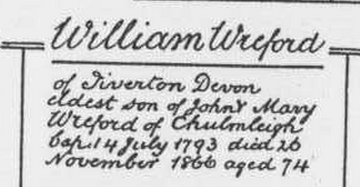
The Wreford Pedigree also notes that he died 26 November 1866 aged 74 which matches the death record, so I’m confident this is my William WREFORD.
776ec-will

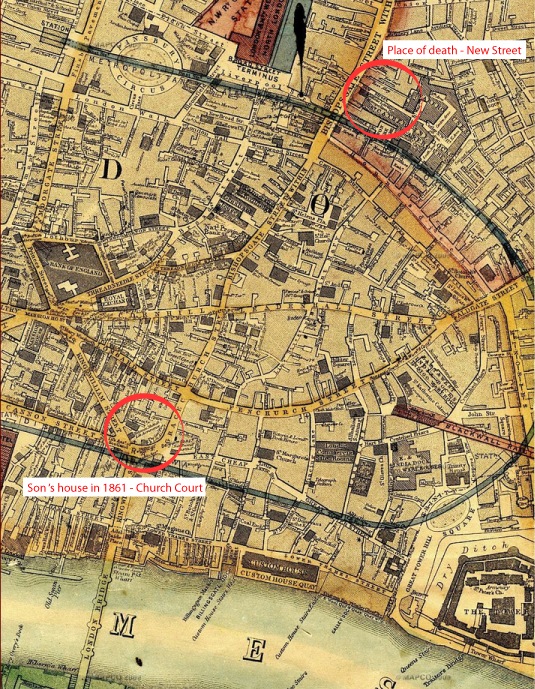
The death record states William, a yeoman, died of ‘Natural decay’ on 26 November 1866 at 5 New Street, Bishopsgate [London].  However, the informant is listed as Thomas Cusiok/Cuscok (also living at 5 New Street), NOT one of his children.

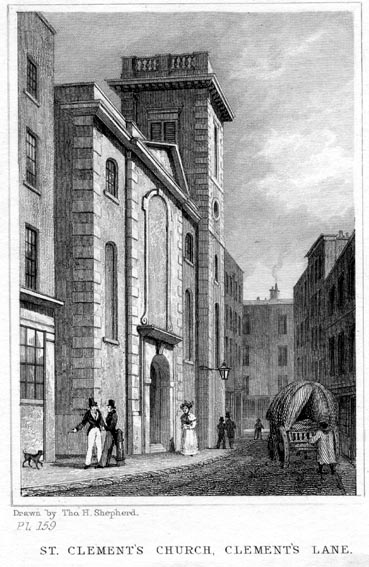
Two of his children were living in London around this time.  William’s son, also named William, had been living in London from at least 1840 – he had married at St Dunstan in the East, and was in the censuses until 1861 as living in the court behind St Clement’s church, Eastcheap. (He was in the police force but by 1871, he was a ‘coffee house keeper’ a little further north in Paul Street.)
1a5a5-williamwreforddeathmap

Also, his daughter, Elizabeth had married a mariner (Alexander SMALL) in London, 1853 and was a widowed lodging house keeper by the 1871 census (where she lived further north in Tower Hamlets – I’m yet to find her on the 1861 census).  Could Thomas Cusiok have been one of her lodgers?

Next steps:
  • Who is Thomas Cusiok/Cuscok?
  • Find Elizabeth SMALL (nee WREFORD) in 1861 census
Related posts:

Neighbouring Families – Part 2

This is a follow on from my previous post – Neighbouring Families.

! The results here are accurate, however not the William BROWN I was tracing (see previous post for correction).  I have chosen to leave this information here to help others.

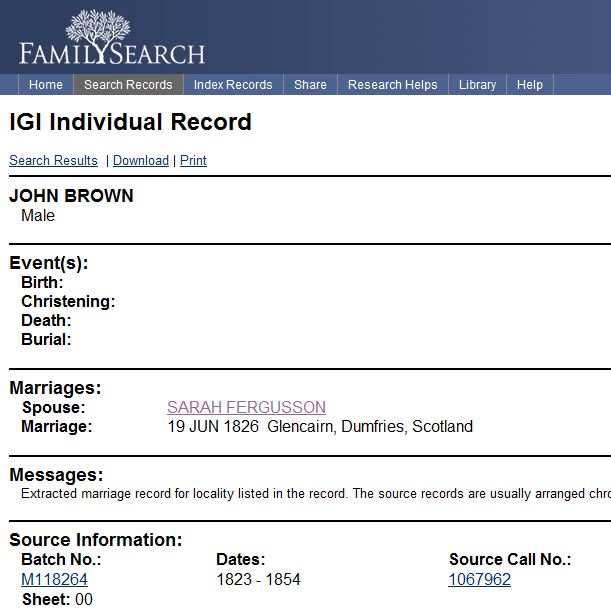
Using FamilySearch, I searched the IGI for Sarah FERGUSSON with a spouse named BROWN.

Success: It listed Sarah marrying a John BROWN in Glencairn, 1826 (about 3 years before William BROWN was born according to the censuses).  This seemed a very good match indeed so I began to search for birth records of William and his brother, John.
No sign of William but I found a birth and christening record for John (parents John BROWN and Sarah FERGUSON) in the nearby parish of Keir, for September 1825.  However, this was a year before his parents’ marriage so although it is not impossible, I could not be sure. Perhaps the parish record will say whether the birth was ‘legitimate’ or not?  I bit the bullet and viewed the actual parish record on ScotlandsPeople.  The birth had been transcribed incorrectly and actually took place in December 1828 – remember ALWAYS view the actual record where possible!
Birth entry for John BROWN, son of John BROWN & Sarah FERGUSSON – December 1828
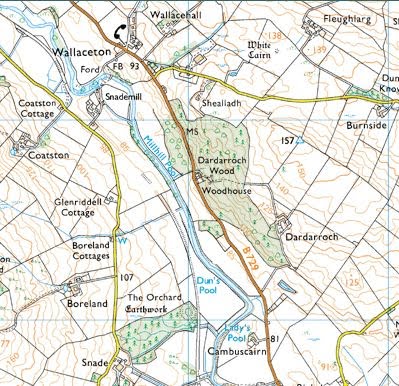
While checking my previous searches on ScotlandsPeople, I found an entry for William, legitimate son of John BROWN and Sarah FERGUSON of Snade Mill (the residence was indecipherable to me at first but the ordnance survey maps helped me a great deal) He was born on the 2nd December 1826 and christened the 6th December.
Birth entry for William BROWN, son of John BROWN & Sarah Fergusson – December 1826
Snade Mill (Cairn Water), Glencairn parish via ScotlandsPlaces

Now I need to link this John BROWN to my James BROWN to prove these neighbours were also family.  I would also like to find the family connection to George BROWN who also lived at Woodhead throughout these censuses.

Next steps (edited):
  • Find a family link between these BROWNs and the BROWNs at Woodhead (see next post in the series)

Related posts:

Neighbouring Families

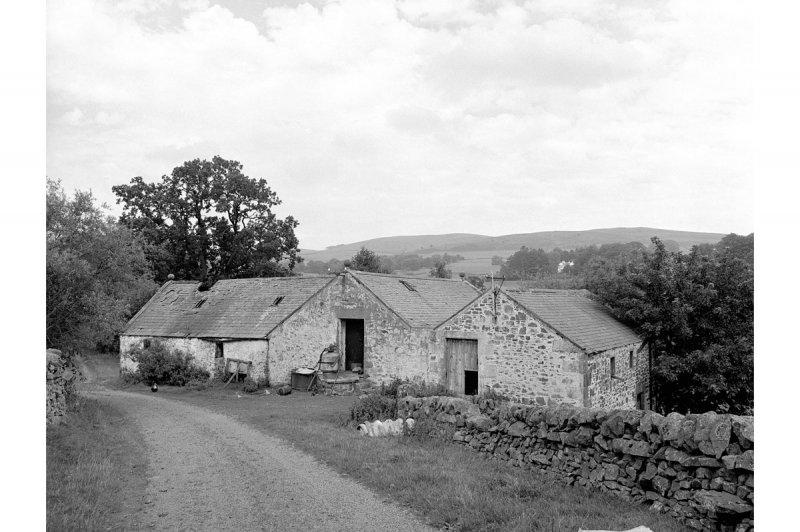
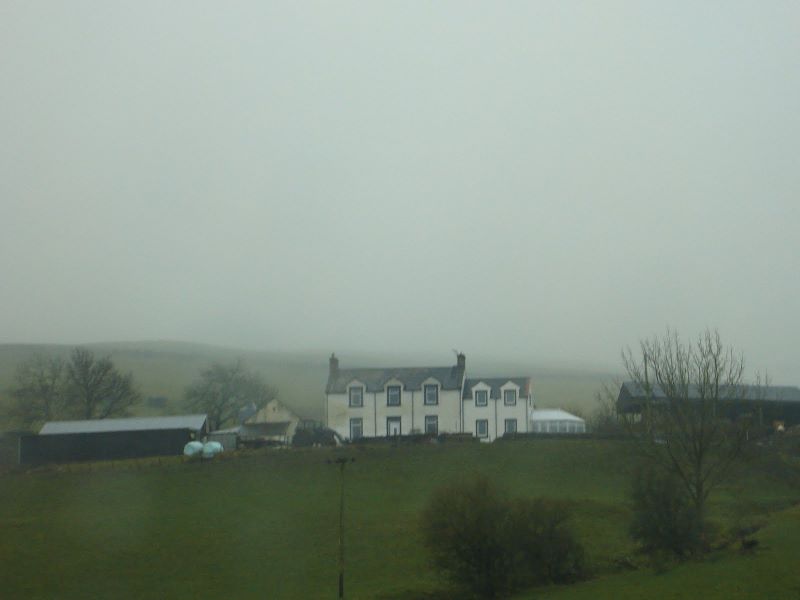
Dardarroch, Dunscore, Dumfriesshire in 2006 – NOT Woodhead of Dardarroch

Eight years ago, I posted on the rootsweb message board regarding my BROWN ancestors farm, Woodhead of Dardarroch, in the parish of Glencairn. Recently someone replied that their ancestor was boarding with some BROWNS at Woodhead Cottage on the 1891 census. By 1891, James BROWN had died and his widow, Sarah (nee DOUGLAS) had moved away.  However, it is too much of a coincidence that the BROWNs still living at Woodhead were an entirely separate family as my BROWN’s had lived there since at least 1824 (discussed in this post).

I had long ago noticed the many BROWN families at and around Woodhead.  Now it was time to find out exactly how these BROWNs were connected.
Dardarroch via Get-a-map
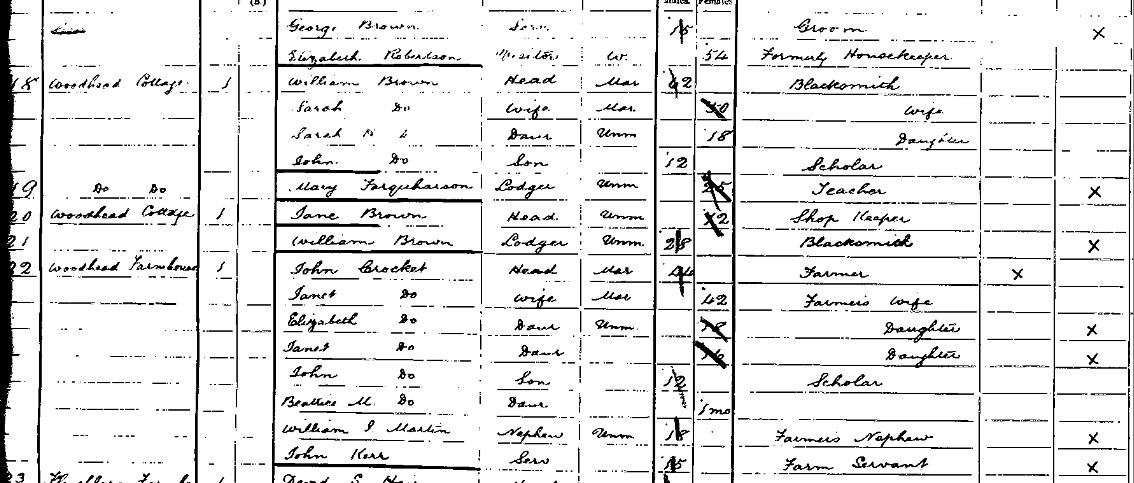
First, I located William Brown at Woodhead Cottage on the 1891 census.  As you can see in the photograph above, Woodhead is quite a large house.  I presume Woodhead Cottage is the smaller part attached to the main building where the other family units lived together.  By this time, James’ widow and youngest son had moved to Keir where they lived in another home named ‘Woodhead Cottage’.
Woodhead on the 1891 census
I searched back for William BROWN (b.1829) and found him at Woodhead Cottage in all but 2 censuses.

Edited: It is here where I made a dangerous mistake.

! I found a William BROWN living at Shillanland (or Shillingland) with his uncle James FERGUSSON and a Jane and Sarah FERGUSSON.  I suspected one of these women (both listed as James’ sisters) was William’s mother.  Also listed was John BROWN (b. 1831) – I had discovered a brother to help with my search.

In 1841 the FERGUSSONs and BROWNs were all living at Burnhouse where the head of the household was a William FERGUSON and possible wife Mary.  This time Sarah was recorded as Sarah BROWN so is apparently William’s mother.  Since the 1841 census doesn’t record the relationships to the head, I will need to find records to prove William FERGUSON is his grandfather.  I will also search for a marriage between Sarah FERGUSSON and a BROWN. !

I now realise that this William BROWN is not the one at Woodhead from the 1861 census through to the 1901 census. A simple traceback through the censuses show that the head of Woodhead Cottage in 1891 is the son of George BROWN and Catherine McDOWAL – living at Woodhead from.  I now need only prove that George BROWN is the brother of my James BROWN


Edit 2: The picture at the top of this post is NOT Woodhead of Dardarroch as I mistakenly believed, it is actually a house called Woodhead in the nearby village of Dunscore. 

Next steps:

  • Find marriage record of Sarah FERGUSSON and BROWN
  • Find birth record of William or John BROWN
See following post – Neighbouring Families – Part 2

Related posts:

The Wrong Stilings

I’ve certainly been very busy with genealogy the last week or so.
The most significant discovery is that I am now quite sure that the Broadhembury STILINGs are not directly linked to me. (Click the link to see my previous Stiling posts, or click Stiling in the right sidebar). The John STILING farming at Lane End Farm is not Harriet STILING’s father. I discovered this by making contact with other people researching the Broadhembury John STILING on Ancestry.co.uk.
Devon has not allowed the LDS to film their parish records and so most baptisms from Devon are not available on the IGI.  This has meant that I have not yet seen Harriet’s baptismal entry but instead have accepted information given to me by a relative over 10 years ago (until I can check the records for myself) which states her mother was Grace FREED.  When I first searched the 1841 census (via microfilm) all those years ago, the Broadhembury John STILING was the closest match I found.  I then decided it was possible Grace had died and this wife, Mary could have been a second wife.  However, the other (very helpful) people researching this family had no knowledge of a first wife (Grace) or of a daughter called Harriet.
John STILING on Harriet’s marriage record

I decided to recheck all my sources.  Harriet’s marriage certificate lists her father as John STILING, a farmer, so I searched the census again with Ancestry.co.uk, including spelling variants.  Still no joy.  The Broadhembury STILINGS were still the only likely option.  I then went through my digital folders and came across a file called ‘Stilings on the 1841 census’.  I had another look and this time saw a John and Grace STILING in the Tiverton area (how I’d not noticed that before is beyond me).  I searched for them in this area and sure enough John and Grace topped the list!  They had been transcribed as Steling.  Someone seems to have originally recorded the name as Styling and someone’s attempt to correct it allowed it to be misread as Steling.

Another John STILING farmer – this time at West Barton Farm near Tiverton

I am more confident that these are my STILINGS – not only because of the wife, Grace but also because they reside in the Tiverton area which is where I found Harriet working as a servant on the 1841 census and her location at the time of her marriage.  However, until I see the birth records, I have no hard evidence that Grace is, in fact, Harriet’s mother and that this is MY family, as she never appears with her parents on a census.

Next Steps: 

  • Visit Devon library to locate Harriet’s baptism entry in the parish records.

Related posts:

Black Sheep Sunday

Painting of Hobart Town from the New Town Road
Hobart Town from the New Town Road by J.S. Prout (1844) (source)
Carrying on from last week’s Black Sheep Sunday post. I have managed to have find some more snippets of information of my Black Sheep duo – George WHITE and Elizabeth ALLEN.
World Vital Records offered free records until the 18th (tomorrow) so I took them up on their offer. I must say, I do find the site a bit of confusing. Searches for records of specific places (such as UK, Australia and New Zealand) tend to also include the American records in the results. This may be something an experienced user can combat but for me, time is of the essence!

Tucked away in the Hobart Town Gazette of 1844 were 2 references for each of my beloved convicts.Elizabeth Allen, Margaret, to Zachary Pocock, Hobart:

newspaper clipping
Hobart Town Gazette – 8 March 1844
George White, George III., from J. & R. Meikle, Murray-street, to Thomas Allcock, Hobart Town.:
newspaper clipping
Hobart Town Gazette – 16 August 1844
George White, George the Third, by Thomas Allcock, Liverpool-street, 2 months, 21st ditto [October]:
newspaper clipping
Hobart Town Gazette – 12 November 1844

Elizabeth Allen, Margaret, by George Lewis, Restdown, 1 month, from 10th ditto [September].:

newspaper clipping
Hobart Town Gazette – 8 October 1844

These snippets refer to whose private service they entered as a passholder.

From 1840 convicts usually served an initial period of “probation” in government work gangs, before becoming “passholders” who competed in the labour market. In the context of high unemployment, this meant that thousands of serving convicts joined ticket-of-leave holders and emancipists to roam the island in search of work. The sight of these workers, who by necessity or choice often lived rough in the bush, horrified and frightened the free settlers… (Source: Van Diemen’s Land by James Boyce – found via Google Books).

Next steps:

  • Search for other issues of the Hobart Town Gazette
  • Research the employers listed for some background information

Related posts: