From the Stowmarket Weekly Post, 20 September 1906:
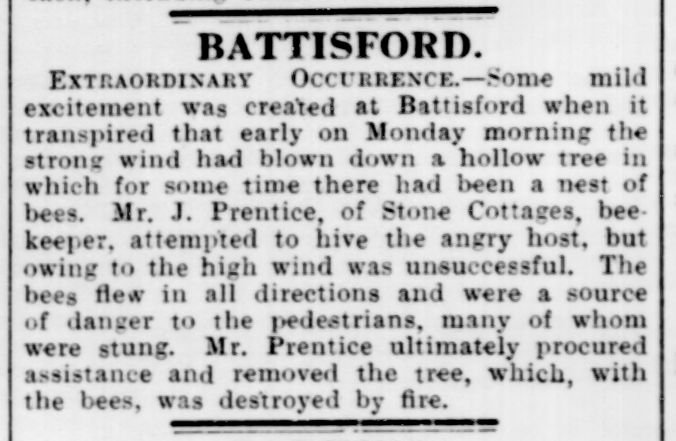
EXTRAORDINARY OCCURRENCE.—Some mild excitement was created at Battisford when it transpired that early on Monday morning the strong wind had blown down a hollow tree in which for some time there had been a nest of bees. Mr. J. Prentice, of Stone Cottages, bee-keeper, attempted to hive the angry host, but owing to the high wind was unsuccessful. The bees flew in all directions and were a source of danger to the pedestrians, many of whom were stung. Mr. Prentice ultimately procured assistance and removed the tree, which, with the bees, was destroyed by fire.
The ‘bee-keeper’, James Prentice, was born in Battisford in 1860. At the time of this ‘extraordinary occurrence’, James was 46 years old. He had been married to his wife, Sarah (nee Leggett) for 19 years but they don’t appear to have had any children.
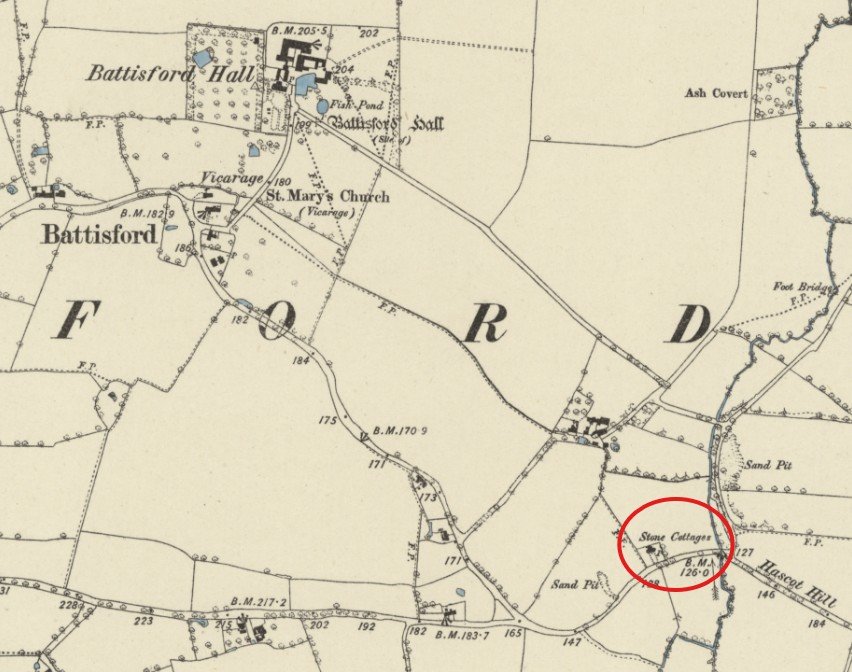
The article states James lived at Stone Cottages which can be seen on a map published in 1884. The corresponding building on a modern map is now known as Stonecroft. It does not specify exactly where the disturbed bees were located – presumably nearer to the church where more ‘pedestrians’ are likely.
‘Stone Cottages’ on c1884 map
James was recorded only as an agricultural or farm labourer in the 1901 and 1911 censuses. This suggests his beekeeping was either a hobby or used for supplemental income to his meagre labouring wage.
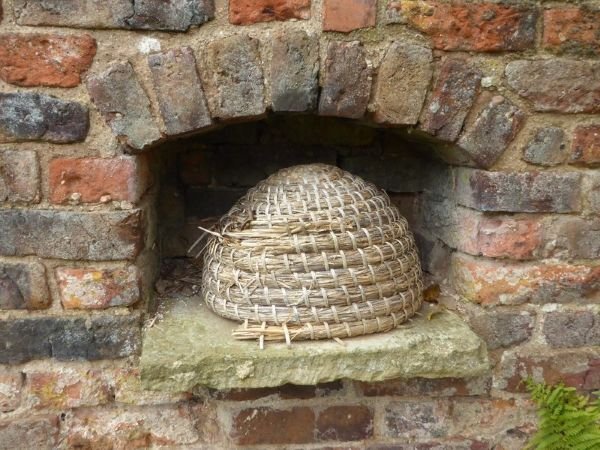
A straw skep in a bee bole at Moseley Old Hall, Staffordshire via geograph.org.uk
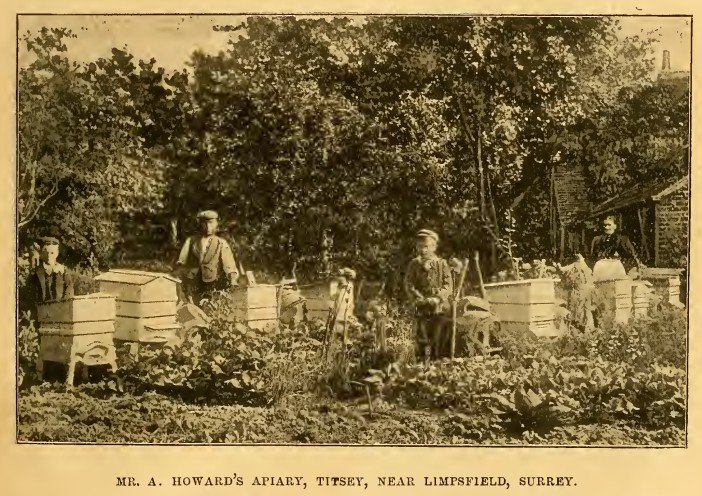
Traditionally, people used straw skeps to keep bees, but by 1906 most beekeepers had moved on to wooden movable-frame hives. The wooden hives enabled easy access to the honeycombs without harming the bees. I suspect James Prentice’s set-up may have looked a bit like Mr A. Howard’s Apiary in Surrey – a photograph of which was published in The British Bee Journal in 1904. (First launched as The British Bee Journal and Bee-Keepers’ Adviser in 1873.)
James lived his entire life in Battisford. He died in 1919, aged 59, and was buried in Battisford churchyard. (The first burial in the cemetery was not until 1926).
I found this charming article in the Suffolk Chronicle published 29 April 1882:
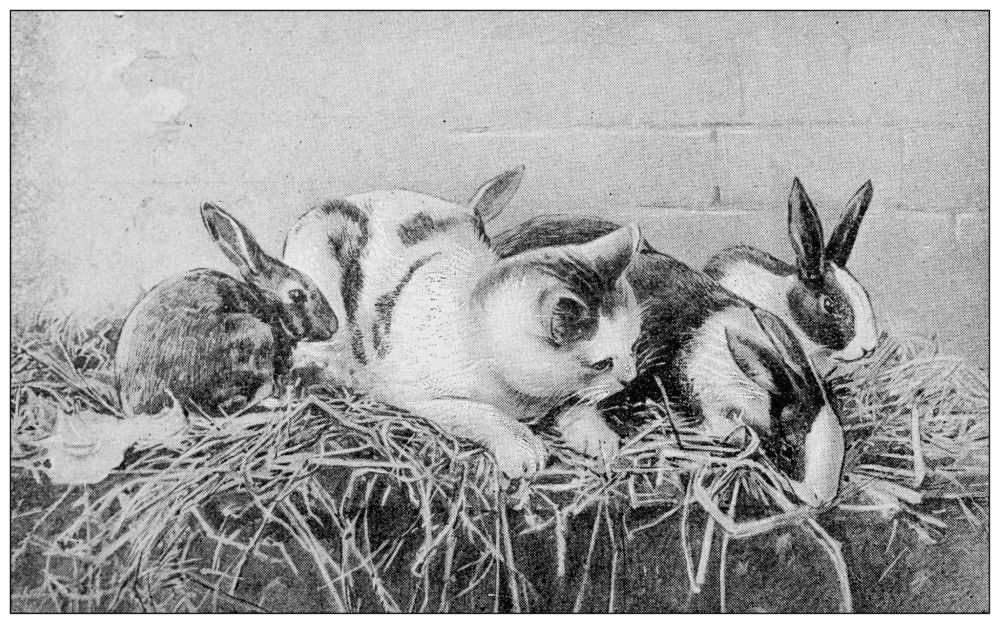
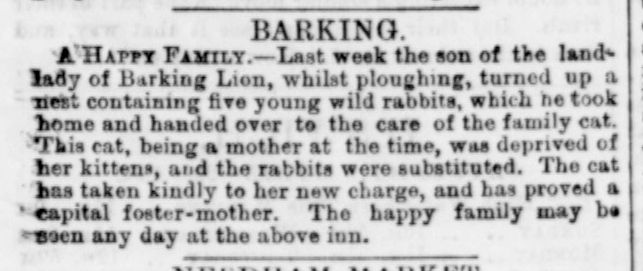
“A HAPPY FAMILY.—Last week the son of the landlady of the Barking Lion, whilst ploughing, turned up a nest containing five young wild rabbits, which he took home and handed over to the care of the family cat. This cat, being a mother at the time, was deprived of her kittens, and the rabbits were substituted. The cat has taken kindly to her new charge, and has proved a capital foster-mother. The happy family may be seen any day at the above inn.” – Suffolk Chronicle, 29 April 1882, p6, c1
Suffolk Chronicle, 29 April 1882, p6, c1
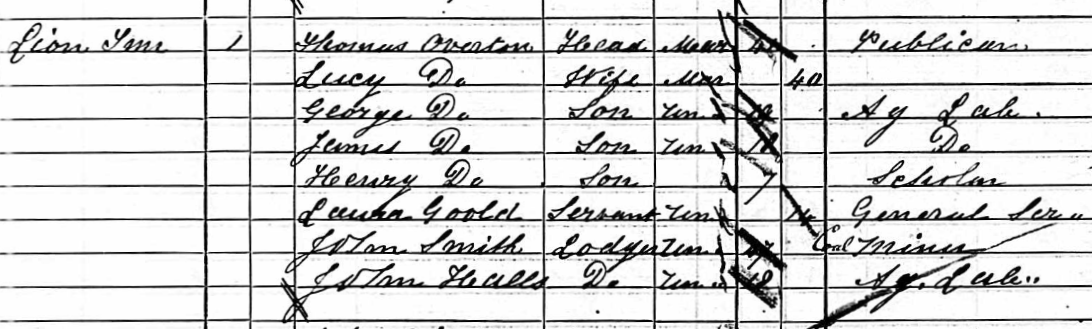
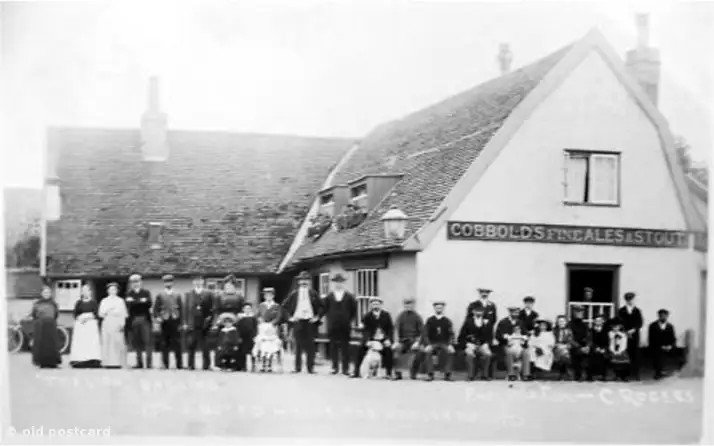
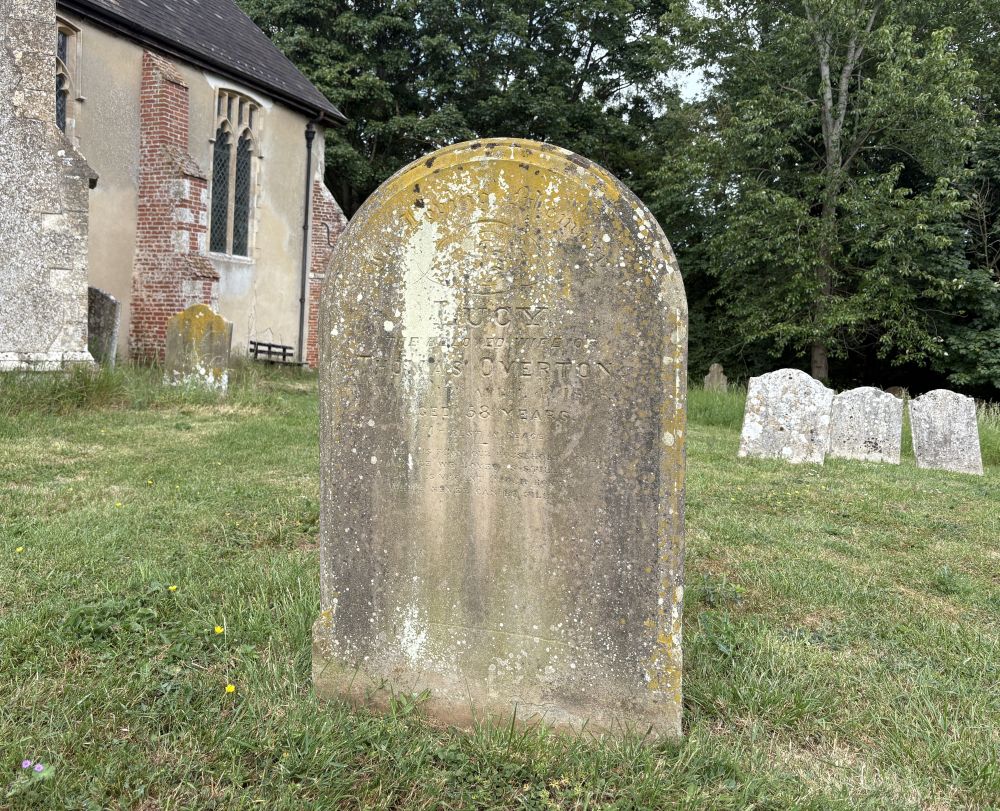
The landlady of the Barking Lion (now considered part of Needham Market) was Lucy Overton (nee Mays). Her husband, Thomas Overton, became the licensee in 1880 but it seems that Lucy actually handled the day-to-day running of the pub, while Thomas continued to work as an agricultural labourer.
Barking Lion household on the 1881 census
In Victorian times, it was rare for married women to hold a license in their own name. Female licensees were most likely to be widows taking over the license from their deceased husbands.
The Barking Lion (with kind permission from Suffolk Pubs)
Lucy died in 1898 and by 1900 Thomas had transferred the license to someone else. Lucy must have been a well known resident since when Thomas died in 1916, he was described as “husband of the late Lucy Overton”.
Lucy is buried in Barking Churchyard. The epitaph on her gravestone reads:
“A LIGHT IS FROM OUR HOUSEHOLD GONE
A VOICE WE LOVED IS STILL’D
A PLACE IS VACANT IN OUR HOME
WHICH NEVER CAN BE FILLED”
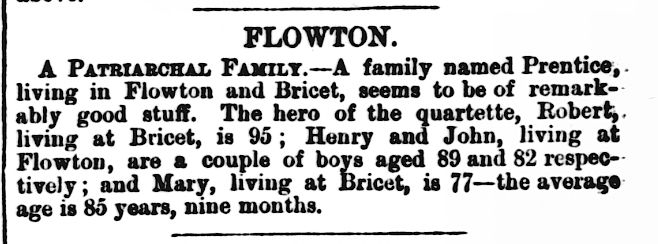
“A PATRIARCHAL FAMILY.—A family named Prentice, living in Flowton and Bricet, seems to be of remarkably good stuff. The hero of the quartette, Robert, living at Bricet, is 95; Henry and John, living at Flowton, are a couple of boys aged 89 and 82 respectively; and Mary, living at Bricet, is 77—the average age is 85 years, nine months.”
This little snippet about the Prentice family of Great Bricett and Flowton is very informative, although not entirely correct.
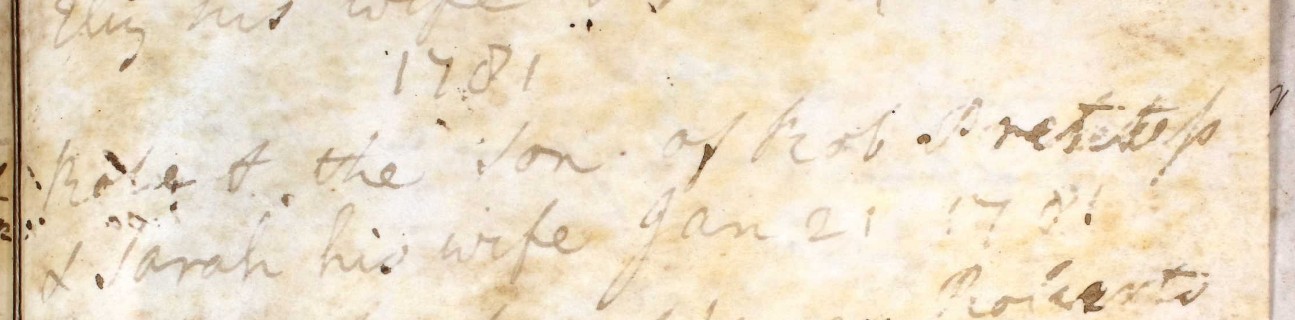
All four mentioned were baptised at Great Bricett. Robert was baptised 1781, Henry in 1786, John in 1791, and Mary in 1803 (although born in 1800). They all appear to be siblings but Mary’s parentage is unclear (father’s name not recorded).
Baptism entry of Robert Prentice in the Great Bricett parish register – 21 Jan 1781
Children were not always baptised soon after their birth (such as in Mary’s case) but in this case, Robert seems to have been. He was baptised early 1781 and considering his parents were married the previous year, 1780/1 seems a likely birth year.
This would make Robert 90 at the time of this article, not 95. Henry’s age was closer to 85 than 89; John’s was 79 rather than 82; and Mary’s was 70 rather than 77.
They probably did believe these to be the correct ages though, since they match the ages given 6 months later in the 1871 census. (Except for Mary, whose age was given as 73.)
All four died within 8 years of the article being published – Robert in 1871, Henry in 1874, John in 1875, and Mary in 1878.
Robert and Mary were buried in Great Bricett churchyard and Henry and John were buried at Flowton (about 4 miles southwest of Great Bricett).
In the 1820s and 1830s, desperate agricultural labourers in England began to revolt. There were a few factors involved in causing this unrest but Land Enclosure is considered to have played a large part.
Agrarian Rioters in 1830
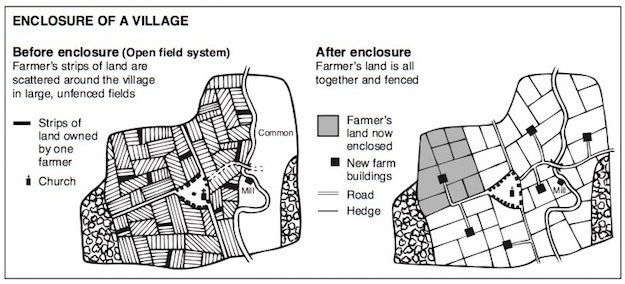
Before Enclosure
Before enclosure, villages used an open field system of farming. Large open fields were divided into strips that would be farmed by its owners. They were often scattered, and there were no fences or hedges to divide them.
There was also an area of common land used for grazing. This was not open to the general public but was land (controlled by the lord of the manor) that people from that village had rights to use. The land would be used to pasture cattle or keep livestock such as geese, and collect turf, firewood, fruit or berries. There would be a communal consensus for when and how the land would be farmed.
After Enclosure
After enclosure, the separate strips were consolidated so that owners had unified pieces of land. These were marked out through fences or hedges with absolute property rights. No communal consensus was needed – owners could do with their land as they wished.
Enclosure of land was not new, but in the late 18th century it was now being formalised with parliamentary acts. A landowner wanting to enclose land in their parish would obtain a private Act of Parliament. Commissioners would then visit the parish to survey the area and hear claims of other land holders or those with rights to the common. The commissioners would then enclose the open fields, allocating a plot of land that was equal in size to the total strips of land a landowner previously held. The common would also be divided and given to landowners depending on their total landholdings in the parish and access they had to the common.
People who previously had common rights lost the ability to use that land to make ends meet and those who still had some rights, such as tenant farmers, were increasingly asked for rent in cash rather than stock or produce.
How were agricultural labourers affected?
Consolidating the land meant that less workers were needed. It became more common for labourers to be paid by the day or week, or employed for short periods such as harvesting, hedging, ditching and threshing. Farmhands became casual labourers with no guarantee of work, and rates of pay dropped because there were so many available workers. The problem grew worse in 1815 when the Napoleonic Wars ended, and many thousands of soldiers returned to the rural labour market.
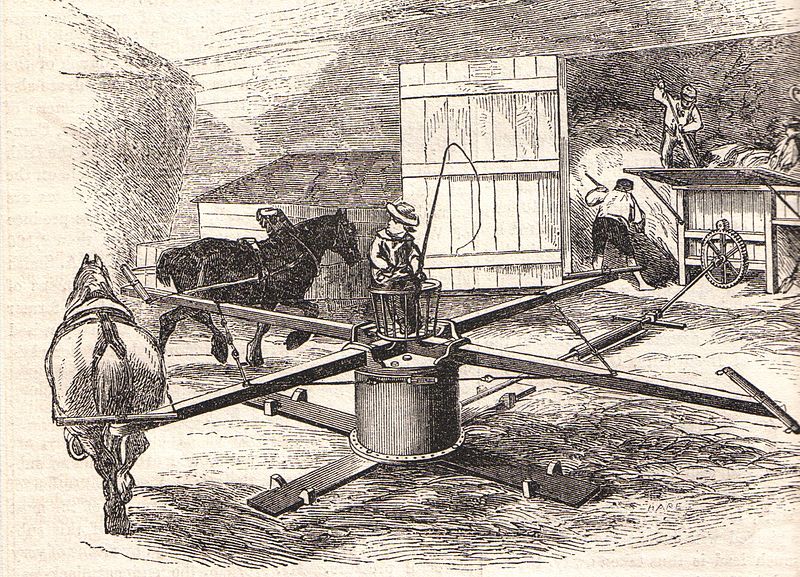
A Horse Gin in Use (The Illustrated Exhibitor, 1851)
The introduction of threshing machines aggravated the situation. Farm labourers who had previously been employed to manually thresh grain over the winter months, were replaced by cheaper and more efficient horse-powered machines. Groups of agricultural labourers began to rise up, setting fire to farms and destroying machinery.
If captured, the rioters faced imprisonment, transportation, and even execution, so it was not an act to be taken lightly.
If you have ancestors who were agricultural labourers in the 1820s and 1830s, they may well have been involved in the protests.
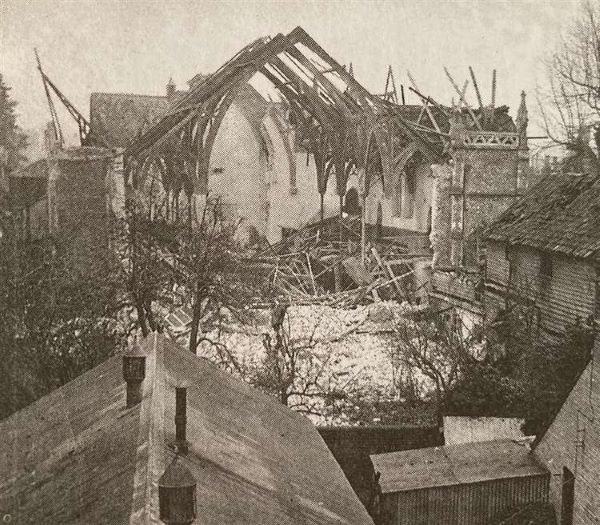
Stowmarket Congregational Chapel after the bombing 1941 (via SuffolkNews)
At around noon on Friday 31st January 1941, a lone German bomber was seen flying towards the town of Stowmarket in the heart of Suffolk. Enemy aircraft tended to fly low in the area to avoid the guns at nearby Wattisham Airfield, and this plane was flying so low under the clouds, that its swastikas could be seen from the ground.
The plane flew over Stowmarket from the direction of Combs Ford, firing its guns, before circling around to fly over again, and drop a stick of bombs in the general vicinity of the market place in town. Thankfully, the busy market place was missed, but a direct hit was made on Stowmarket Congregational Church, destroying the building. Houses behind the church grounds were also struck, killing one of the residents.
I learnt about this event through “The Bombing of Stowmarket Congregational Church” by Steve Williams (2004). The book is a compilation of many reports and eyewitness accounts of that day and I found it so fascinating that I devoured the contents in one sitting! The recollections are presented in such a way that you start to feel like you know the inhabitants and their various connections to each other.
Mrs Rhoda Farrow (nee Hearn), lived at ‘Marron’ (9 Kensington Road), behind the Congregational Church. In the 1939 register, Mrs Farrow was recorded at the address with her son Ronald, daughter Marjorie and new son-in-law, Roland Wilden. Marjorie had actually married at the Congregational Church, only a month prior to the register being taken. (Her father, Rhoda’s husband Charles Farrow, had died only a few months before.)
1939 register for Kensington Road showing the Farrow, Capp and Smith families
After the bombs fell on 31 January 1941, Bernard Moye, then 16 years old, accompanied the town’s surveyor, Mr. John Black, into town to assess the damage…
When they learnt that another bomb had fallen on Kensington Road they went to the scene and found other members of the rescue party who had already managed to get two ladies out, one of whom was Mrs. Capp, who had the flower shop in the Market Place next to Woolworth’s. They had saved themselves by sheltering under the stairs of Mrs. Capp’s house, which was named ‘Floral-Dene’.
Bernard remembers seeing the roof seeming to be suspended in mid-air with nothing much supporting it. They were then told that there was no-one in next door at ‘Marron’ and that Mrs. Farrow was at the railway station seeing her son off from Forces’ leave. This tragically was not the case as Bernard remembers being in the party which, after clearing some rubble from the passageway of Mrs. Farrow’s house, they then lifted the door that lay amongst the debris and found her body laying there. Bernard commented ‘she unfortunately appeared to have arrived home at the wrong moment.'”
(excerpt from The Bombing of Stowmarket Congregational Church (2004), pp15-16)
Mrs Beatrice Smith, who lived at number 7, had been at the first aid centre on 24-hour call with the Red Cross. She would serve in the Red Cross for 51 years. In 1975, on the occasion of her retirement, The Bury Free Press (7 Nov 1975, p2) remarked that her devotion to duty had probably saved her life. The book holds quite a few of recounts of near-misses and it appears extremely fortunate that Mrs Farrow was the only person killed in the attack.
The new Stowmarket Congregational Church was completed in 1955.
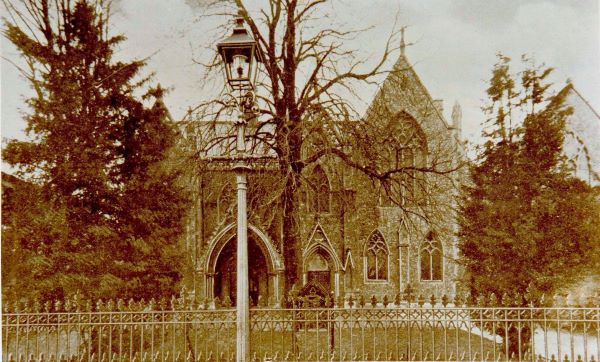
A new ultra-modern building was finally completed on the same site in 1955 and still exists (now known as the United Reformed Church). The new church’s contemporary look was very different from the previous church’s Victorian Gothic style and received mixed reactions. I can’t help but think that Stowmarket town centre would have a very different feel if the old building was still around today.
I also can’t help but think that it’s somewhat of an eerie coincidence that I was given this book and learnt of the bombing for the very first time, only a few days before the 83rd anniversary of the church’s destruction, and the death of Rhoda Farrow.