Patently Improved

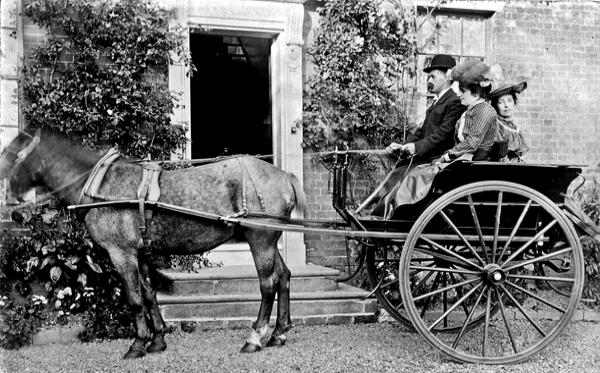
A two-wheeled dogcart (via Gail Thornton)

William Glaister, my 2nd great-grandfather, was a coachbuilder in Dunedin, New Zealand in the late 19th and early 20th century. A couple of years ago, I discovered he was also an inventor.

In 1892, William filed a patent for ‘An invention for improvement in two-wheeled vehicles’. An abstract was published in the New Zealand Gazette on 31 March 1892 (available via Ancestry).

New Zealand Gazette (Supplement), 31 Mar 1892, p1

If a member of the public wanted to purchase copies of the patent documents, they would pay 2 shillings and 6 pence for the written description of the invention, and 3 shillings for the accompanying technical illustration. William, himself, would have paid at least a few pounds for actually filing the patent. (Source: New Zealand Legislation – 1889 fee schedule)

Using the Intellectual Property Office New Zealand Patents register, I was able to view the original patent document in which included a description (in his own handwriting) and a drawing of the concept.
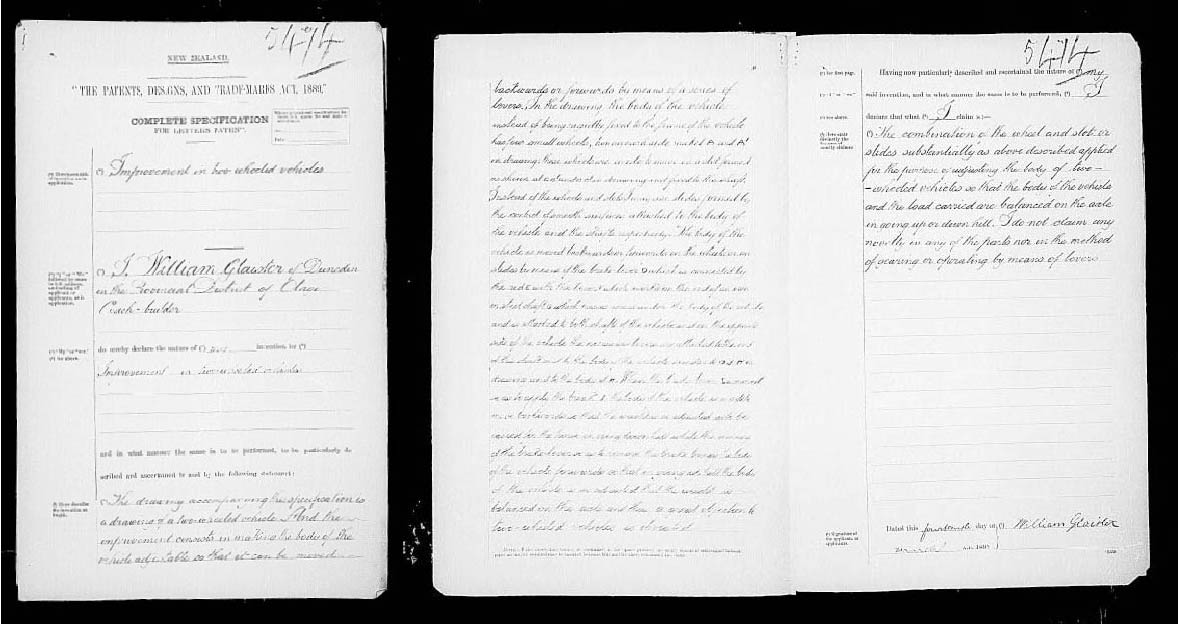
An Invention for Improvement in Two-Wheeled Vehicles – William Glaister

I have transcribed the specification, adding punctuation and paragraphs for ease of reading.

Here describe the invention at length

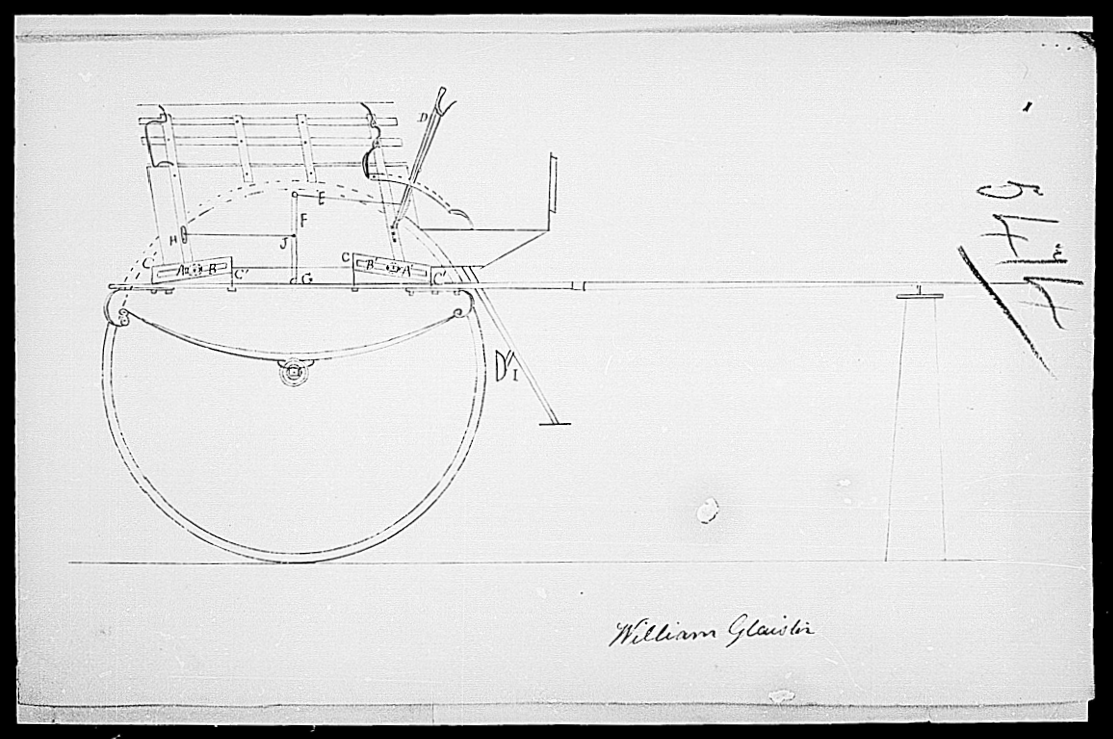
The drawing accompanying this specification is a drawing of a two-wheeled vehicle, and the improvement consists in making the body of the vehicle adjustable so that it can be moved backwards or forwards by means of a series of levers.

In the drawing, the body of the vehicle instead of being rigidly fixed to the frame of the vehicle has four small wheels, two on each side marked A and A1 in drawing: these wheels are made to move in a slot formed as shown at C C1 and C C1 in drawing and fixed to the shaft.

Instead of the wheels and slots, I may use slides formed by the conduct of smooth surfaces attached to the body of the vehicle and the shafts respectively.

The body of the vehicle is moved backwards or forwards on the wheels (or on slides) by means of the brake-lever D which is connected by the rod E with the lever F which works on the end of an iron or steel shaft G which passes across under the body of the vehicle and is attached to both shafts of the vehicle and on the opposite side of the vehicle the necessary levers are attached to the end of this shaft and to the body of the vehicle similar to G J H in drawing and to the body at H.

When the brake-lever D is moved so as to apply the break (I), the body of the vehicle is made to move backwards so that the weight is so adjusted as to be easiest for the horse in going down hill, while the moving of the brake-lever so as to remove the brake, brings the body of the vehicle forwards so that in going up hill the body of the vehicle is so adjusted that the weight is balanced on the axle and thus a great objection to two-wheeled vehicles is obviated.
Having now particularly described and ascertained the nature of my said invention, and in what manner the same is to be performed, I declare that what I claim is:

The combination of the wheel and slot or slides substantially as above described applied for the purpose of adjusting the body of two-wheeled vehicles so that the body of the vehicle and the load carried are balanced on the axle in going up or down hill. I do not claim any novelty in the any of the parts nor in the method of gearing or operating by means of levers.

Dated this fourteenth day of March A.D. 1892 [signed] William Glaister

It’s still a bit difficult to understand (for me), but the Otago Daily Times gave a pretty good summary when William presented a cart using his invention at the Otago Agricultural Show that same year: “The cart is provided with patent gear by means of which the body of the vehicle can be thrown backwards or forwards at will so as to adjust the load on the horse’s back”. Load-balance was apparently a well-known issue for users of this type of vehicle.
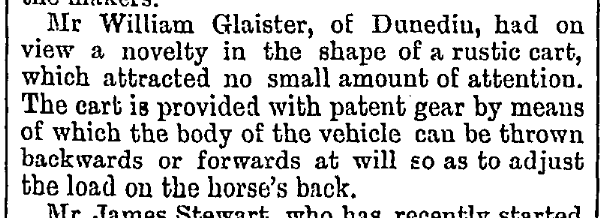
Otago Daily Times, 3 Dec 1892, p6 (Supplement), c4

I’m not sure how successful the invention was or whether it was utilised by other coachbuilders. Perhaps someone in the know could shed some light on that for me?

Related posts:

Bombay Love Story Continued…

Obituary Notice for Drusilla WILLS (nee WREFORD) (Auckland Star, Volume LXV, Issue 140, 15 June 1934, p3)

This obituary for Drusilla WILLS (nee WREFORD) featured in my previous post stated that:

Mrs. Wills is survived by two children. Mr James Wills and Mrs. D. Evans, and 15 grandchildren, and 20 great-grandchildren.

My searches of the NZ BDM showed me that Thomas & Drusilla had 3 children:

Richard Henry, Drusilla Howard and James Howard WILLS birth registrations

So you may presume (as I did) that:

a) their son Richard Henry died prior to 1934; and

b) the Mrs D Evans referred to is their daughter, Drusilla Howard.

However a search of Wills/Evans marriages from 1865 only came up with 2:

WILLS/EVANS marriage registration

This means that one of the surviving children was actually ANOTHER daughter called Charlotte (and the D being her husband’s initial).  However, there was no birth record of a Charlotte WILLS.  So, IS this Charlotte a daughter of Thomas & Drusilla?

I was able to find the marriage of Drusilla Howard WILLS (spelt Drucilla – one of the 3 births listed) to a William SHORT in 1899.

I checked the WREFORD pedigree compiled in 1908 (more on that another time) which notes Drusilla and Thomas had SIX children.  With only 3 of those listed in the online BDMs – is it possible to find these other children OR was the compiler mistaken?

Wreford Pedigree

Next Steps:

  • Check birth notices in newspapers (Papers Past)
  • Check BDM for WILLS deaths prior to 1934
  • Scour newspapers for any other references to the family

Related posts:

Bombay Love Story

After receiving an email asking whether Drusilla WREFORD (the 14 year old innkeeper originally mentioned in my post Pub Crawl) met her husband, Thomas WILLS on the voyage to NZ, I delved further into this family.  It was a good question and one I hadn’t really thought of since she was not my direct ancestor and I have so much to research on my genealogical plate.  However, my curiosity was piqued and I donned my detective cap to find out more.

After some apparent hard times, George & Harriet WREFORD, who had apparently run the Hare & Hounds Inn run the Commercial Inn in Witheridge, Devonshire (c1861), emigrated with their 8 surviving children to New Zealand aboard the Bombay on the 26 Nov 1864.  Sadly, their youngest daughter, Mary Ann died on the voyage, aged 2.

My first step was to consult the 1864-5 passenger list for the Bombay voyage these WREFORDS took and funnily enough there was a Thomas WILLS on board aged 23.  Drusilla was 17 at the time so quite possible they could meet and take a fancy to one another.  Or perhaps they were already betrothed before leaving England?  I diverted course to search for Thomas on the UK censuses but without having any more information about him abandoned that search and turned instead to the fabulous NZ Papers Past website.

Sisters Augusta, Drusilla and Sarah Grace nee WREFORD
Although I was initially searching for marriage notices, most of my day has since been spent reading the articles and snippets which mention my ancestors and their neighbours, revisiting old avenues of research and getting to know the other members of this family.  My search also led me to the NZ Births, Deaths & Marriages online where I was able to locate the WREFORD sisters’ marriages (or at least their registration numbers).
WREFORD sister marriages including Drusilla’s to Thomas WILLS
So proof that 14 year old innkeep, Drusilla married somebody called Thomas WILLS.  The 1865 marriage made it seem likely but there was still no real evidence to suggest it was the same Tom on the Bombay with the family.
Drusilla’s Death Notice (also mentions sister Sarah Grace)
Until… serendipity stepped in.  Tweaking the newspaper search words to ‘bombay’ and ‘wreford’ led me to the obituary notice for Drusilla in the Auckland Star (Volume LXV, Issue 140, 15 June 1934, p3).
Obituary Notice for Drusilla WILLS (nee WREFORD)

The death occurred on June 13 at Onehunga of Mrs. Drucilla Wills, aged 89 years.  She was a daughter of the late Mr. and Mrs. George Wreford, and came to New Zealand with them when a child in the ship Bombay.  Her late husband, Mr. Thos. Wills, was a passenger on the same vessel. They were married at St. Peter’s Anglican Church, Onehunga, by the late Rev. Dr. Purchas, and settled at Awhitu, where Mr. Wills engaged in the gum trade for many years.  When he retired from business Mr. and Mrs. Wills went to reside at Onehunga.  Mrs. Wills is survived by two children. Mr James Wills and Mrs. D. Evans, and 15 grandchildren, and 20 great-grandchildren.

Ta – dah!

Related posts:

Desperately Seeking John

A couple of months ago, I found out via an 1896 newspaper article that my ancestor, Alexander Ritchie BUCHAN, had a brother called John.  John was there when Alex died pulling in a fishing net but where was he all those other years?
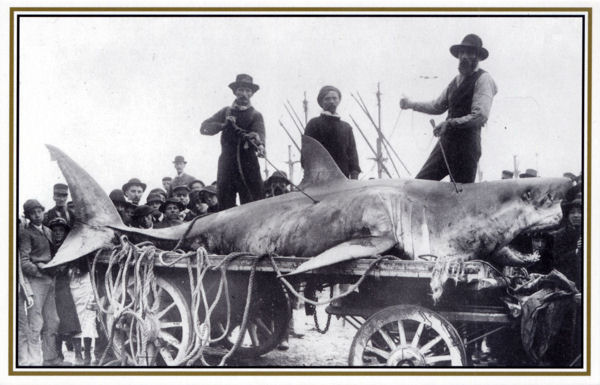
18 foot shark caught in Otago Harbour 1894

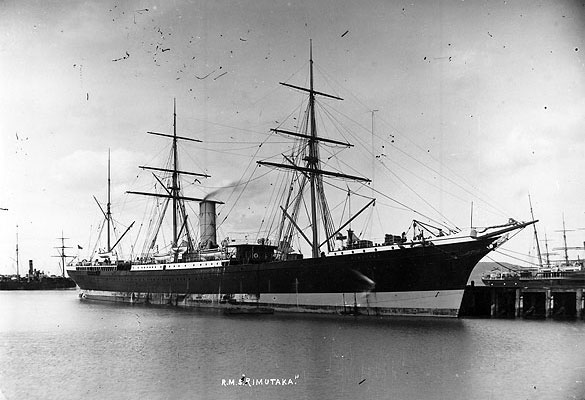
Charles BUCHAN and his wife Jessie (Janet RITCHIE) migrated to New Zealand on the Rimutaka in 1893. All their children (except Charles), some of whom had begun their own families went too.  Peter, Jessie (married to John BUCHAN), Alex and William all arrived on the Rimutaka. John had never appeared with the family on the censuses and so I hadn’t realised he was missing.
A little bit of research proved that John was actually twin brother of William – born 11th July 1868 in Peterhead.  Was it just coincidence that he was away from home all those census nights?  Did he stay in Scotland or
A search of shipping lists from 1890 don’t seem to show John’s arrival in New Zealand so it seems likely that he migrated before the rest of the family.
RMS Rimutaka

A search of the IGI comes up with  9 other John BUCHANs born in Scotland in 1868 alone. I have scribbled down these parents names to avoid confusion as the long census search begins…

Edited to add:
Just reread an excerpt from Roy BUCHANs book about the family:

The Buchan family settled in Carey’s Bay, a mile from Port Chalmers. They fished in the comparative calm of the inner Otago Harbour instead of the hazardous and stormy North Sea. The main breadwinners were Jack, his brother-in-law Alexander and father-in-law Dade [Charles]. The younger two men would fish from an open boat in the harbour and Dade would sell the fish.

Could brother John actually refer to his brother-in-law John (married to Jessie)? The newspaper article mentions that Charles also gave evidence at the hearing which means he was probably also there (as the excerpt suggests).

Related posts:

More Buchan ‘Lunatics’

I was very excited to receive an email from Roy BUCHAN – author of the book ‘From Peterhead to Passchendaele’ mentioned on this post and distant relative of mine.


He also mentioned that the Mr Peter BUCHAN listed above (on the Rimutaka 1893 passenger list) as aged 35 was, in fact, mentally retarded from birth and died 3 years after landing in New Zealand.  This was roughly the same time as his brother, and my direct ancestor, Alexander Ritchie BUCHAN died while working on a fishing boat.

Before I’d even had a chance to look into it, another distant BUCHAN relative, emailed me the information that Peter had actually died in July 1897 (seven months after his brother, Alex).  He apparently died at Seacliff Hospital, Dunedin – also known as Seacliff Lunatic Asylum.
(NOTE: A further email from the same relative warns that this may not be true)

Seacliff Hospital, Dunedin, NZ c.1910

Peter was the son of Charles and Jessie (nee RITCHIE) BUCHAN.

I will now be checking for his asylum records.

Next Steps:

  • Check for Peter BUCHAN’s death in New Zealand (Place of death – asylum?)
  • Look into story from Roy Buchan’s book that suggests he went out ‘wandering’ and died from exposure

Related posts: